Disclosure: This post contains affiliate links. As an Amazon Associate, TBB 787 earns from qualifying purchases at no extra cost to you.
Introduction: Standing at the Origin of Modern Science
If you were to identify the single moment when the modern scientific age began — when humanity first achieved a rigorous, mathematical understanding of the natural world that could predict the motion of planets, the trajectory of cannonballs, and the ebb and flow of the tides with equal precision — that moment would be 1687, the year Isaac Newton published his Principia Mathematica. In that extraordinary work, Newton unified the motions of the heavens and the earth under a single set of laws, demonstrating for the first time that the universe operates according to discoverable, mathematical principles that apply everywhere and always. It was the most important scientific achievement in human history. And it was produced by one of the most complex, difficult, solitary, and genuinely strange human beings who ever lived.
Early Life: A Premature Child Destined for the Church
Isaac Newton was born prematurely on January 4, 1643 (December 25, 1642, by the old Julian calendar), in Woolsthorpe, Lincolnshire, England. He was so small and weak at birth that two women sent to fetch supplies for the delivery reportedly stopped to sit and chat on the way, believing there was no urgency — the baby was unlikely to survive the hour. He was so tiny he could reportedly fit inside a quart pot. He survived, but his early health remained fragile, and the difficult circumstances of his birth cast a long psychological shadow over his entire life.
His father, also named Isaac Newton, had died three months before his birth — a farmer who had never learned to read or write, whose estate the posthumous son was expected eventually to inherit. When Newton was three years old, his mother, Hannah Ayscough, remarried — a prosperous minister named Barnabas Smith — and departed to live with her new husband, leaving young Isaac in the care of his maternal grandmother. This abandonment left wounds that Newton never fully healed. By his own later account, he harbored violent fantasies toward his stepfather and mother as a child; a notebook from his youth contains, among a list of his sins, the entry: “Threatening my father and mother Smith to burn them and the house over them.” The intensity of the pain and rage packed into that single line is startling.
Newton attended school in Grantham, where he boarded with an apothecary named Clark. He was not initially distinguished as a student — he ranked near the bottom of his class in his early years, apparently because he was more interested in building mechanical models and conducting his own experiments than in the prescribed curriculum. A fight with a school bully appears to have been a turning point: Newton, having soundly beaten the bully physically, decided to beat him academically as well, and rapidly rose to the top of his class. This episode — the burning need to prove himself, to defeat and surpass perceived rivals — would be a recurring motif throughout his life.
Cambridge and the Plague Years
Newton entered Trinity College, Cambridge, in 1661, initially as a sizar — a student who paid his way by performing services for wealthier students, a humbling position for a boy from a landed family. Cambridge’s official curriculum was still largely Aristotelian, teaching medieval natural philosophy that was increasingly out of step with the scientific revolution underway elsewhere in Europe. Newton largely ignored the official curriculum and educated himself, reading Descartes, Galileo, Kepler, and the latest work in mathematics and natural philosophy. His undergraduate notebooks show the astonishing scope and speed of his self-directed learning.
He received his bachelor’s degree in 1665, but almost immediately the university was closed due to the bubonic plague, which was raging through England. Newton retreated to Woolsthorpe for what would prove to be the most productive two years of any scientist’s life. Working in almost total isolation, with no access to libraries or colleagues, armed only with his own extraordinary intellect, Newton invented calculus — a completely new branch of mathematics that provided tools for calculating rates of change and areas under curves, tools that would prove indispensable for the whole of subsequent physics and engineering. He developed his theory of optics, discovering that white light is composed of all the colors of the spectrum (demonstrated by refracting light through a prism). And he began formulating the theory of universal gravitation.
The Famous Apple: Myth and Reality
The story of Newton watching an apple fall from a tree and being struck by the idea of gravity is one of the most famous anecdotes in the history of science — and, unusually for such stories, it is broadly true, albeit simplified. Newton himself recounted the incident to multiple people in his later years. The apple’s fall prompted him to ask: if gravity extends to the top of the tree, why not further? Why not to the Moon? And if gravity reaches the Moon, perhaps it is the same force that keeps the Moon in orbit around the Earth.
The insight was not that gravity existed — everyone knew objects fell to the ground. The insight was that gravity might be a universal force, operating at astronomical distances as well as terrestrial ones, and that it might explain not just falling apples but the orbits of planets around the Sun. Proving this mathematically, however, was far beyond Newton’s current mathematical tools. He needed calculus — which he was simultaneously inventing — to make the demonstration rigorous. The full theory would not be published for another two decades.
📚 Best Books on Isaac Newton
- 📖 Isaac Newton by James Gleick— A masterpiece of concise biography. Gleick captures Newton’s extraordinary mind, his difficult personality, and the world-shaking significance of his work in just 288 pages. Beautifully written and brilliantly insightful. The best short biography of Newton available.
 $15.14
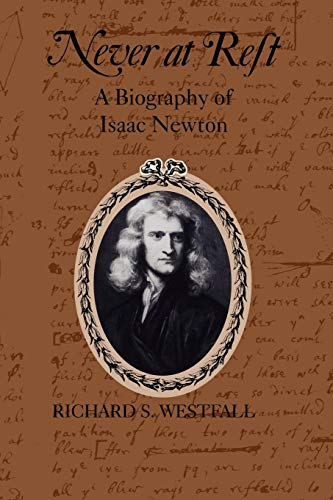
 - 📖 Never at Rest: A Biography of Isaac Newton by Richard Westfall
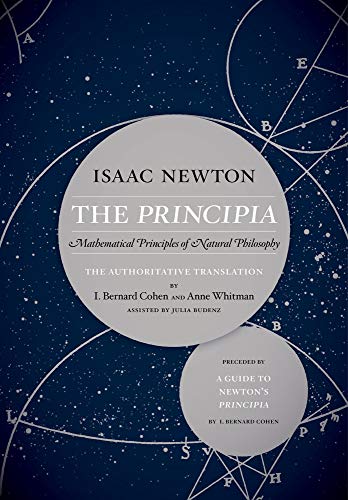
— The definitive scholarly biography, exhaustive and authoritative. For readers who want the full story in complete detail. A landmark of scientific biography. - 📖 Principia: Mathematical Principles of Natural Philosophy by Isaac Newton
— Newton’s masterwork itself, in modern English translation. One of the most important books ever written. Reading even portions of it gives you a direct encounter with one of the greatest minds in history.

The Principia: The Book That Explained the Universe
Newton returned to Cambridge after the plague years and was elected a Fellow of Trinity College and then Lucasian Professor of Mathematics (a chair later held by Stephen Hawking). For years, he worked on his theories privately, publishing little, sharing with almost no one, deeply reluctant to expose his ideas to the criticism and controversy that he knew publication would bring. He had been stung by disputes over his optical work and resolved to keep his greatest discoveries to himself.
The catalyst for finally publishing was the astronomer Edmond Halley, who visited Newton in 1684 and posed a question that had been debated in London’s scientific circles: what would the orbit of a planet look like if the force of gravity decreased as the square of the distance? Newton replied immediately that it would be an ellipse — he had proven it. Halley was stunned. He urged Newton to publish his proof, and Newton, inspired, expanded his demonstration into a comprehensive account of all the laws governing motion and gravitation. With Halley personally financing the publication, the Principia Mathematica appeared in 1687.
The Principia established three laws of motion (inertia, F=ma, and equal and opposite reactions) that remain foundational to physics and engineering today. It demonstrated that a single law of universal gravitation — attracting every body to every other body in proportion to the product of their masses and inversely proportional to the square of the distance between them — explains the orbits of planets, the motion of comets, the behavior of pendulums, the rise and fall of tides, and the trajectory of projectiles on Earth. The heavens and the Earth operated by the same mathematical laws. For the first time in history, the universe was shown to be a comprehensible, lawful system, amenable to human understanding.
Newton and Alchemy: The Secret Life of a Scientific Revolutionary
The public image of Newton — the rational, austere scientist who drove mysticism from the study of nature — is only half the picture. Newton’s private intellectual life was far stranger and more complex than his public scientific legacy suggests. He spent enormous time and energy on subjects that his scientific contemporaries had already largely abandoned: biblical chronology, theological prophecy, and above all, alchemy.
Newton left behind approximately one million words of alchemical notes — more than his combined output on mathematics and physics. He conducted thousands of alchemical experiments in a small laboratory adjoining his Cambridge rooms, sometimes working through the night, recording his findings in coded notebooks. He was convinced that the ancient alchemical texts contained genuine knowledge of the transformations of matter, encoded in symbolic language to prevent the uninitiated from accessing power that could be dangerously misused.
The historian John Maynard Keynes, who acquired a large portion of Newton’s alchemical manuscripts, described Newton as “the last of the magicians, the last of the Babylonians and Sumerians, the last great mind which looked out on the visible and intellectual world with the same eyes as those who began to build our intellectual inheritance rather less than 10,000 years ago.” This is perhaps too romantic, but it captures something real: Newton stood at a peculiar crossroads in history, with one foot in the modern scientific world he was helping to create and the other in an ancient tradition of esoteric knowledge he never fully abandoned.
Newton’s Later Life: The Mint and the Witch Hunt
After a mental breakdown in 1692-93 — possibly triggered by mercury poisoning from his alchemical experiments, possibly by the accumulated stress of years of solitary, obsessive work — Newton left Cambridge and, in 1696, accepted a position as Warden (later Master) of the Royal Mint in London. This was not a sinecure for a retired genius but a substantive administrative role, and Newton threw himself into it with characteristic intensity.
England at the time was suffering from a severe currency crisis: widespread clipping and counterfeiting of silver coins had debased the currency and threatened the financial stability of the nation. Newton led a systematic recoinage of all silver coins, replacing the old, irregular hand-struck coins with new, precisely milled coins with milled edges (impossible to clip without detection). He also conducted a vigorous campaign against counterfeiters, personally visiting prisons and taverns to gather evidence, acting as detective, prosecutor, and judge. During his time at the Mint, Newton sent at least 28 people to the gallows for coinage offenses.
The Rivalry with Leibniz: A Priority War for the Ages
The most bitter episode of Newton’s later career was his feud with the German mathematician Gottfried Wilhelm Leibniz over who had independently invented calculus. Both men had developed calculus independently — Newton first (during the plague years, 1665-66), Leibniz second (around 1675), but Leibniz published first (1684), while Newton’s work circulated only in unpublished manuscripts for years. The dispute over priority became increasingly vicious, with accusations of plagiarism flying in both directions, and ultimately descended into a pamphlet war conducted largely by partisans on both sides rather than the principals themselves.
The controversy had real scientific consequences: British mathematicians, rallying around Newton and refusing to use Leibniz’s superior notation out of national loyalty, fell behind continental mathematicians for a century. Newton used his position as President of the Royal Society to stack an “independent” investigation of the priority dispute with his own supporters, producing a verdict — now known to have been largely written by Newton himself — declaring in his favor. It was one of the most egregious examples of abuse of institutional authority in the history of science. Leibniz died in 1716, embittered, with Newton’s verdict having done enormous damage to his reputation.
🔭 Top Science Kits and Books for Newton Enthusiasts
- 🍎 Newton’s Cradle Physics Toy — Executive Desk Decoration— The classic demonstration of Newton’s laws of motion and conservation of momentum. A beautiful, meditative desk piece that illustrates fundamental physics principles with every swing. A perfect gift for science lovers.
- SCIENTIFIC DESIGN:CERROPI newton’s cradle adopt scientific design,keep the pendulum balls perfectly lined up,make it pos…
- SUPERIOR QUALITY:Our newtons cradle made of 8mm chromed metal steel bar, 20mm steel Ball,high-impact nylon, ultra-thin n…
- WIDE APPLICATION:This newton balls can be used as office desk gadgets toys to relieve stress; as teaching aid,teaching s…
$39.99 - 🔬 Prism Set for Light Experiments — See Newton’s Spectrum— Recreate Newton’s famous prism experiments and see white light split into its component colors. An accessible, hands-on way to experience one of Newton’s greatest discoveries.
- Handmade and inspected to ensure all of our K9 crystals are clear and free of inclusions.
- Everything you need to start taking incredbile pictures is right here. Now you can creat stunning effects easily in your…
- Set includes (1) 50mm Crystal Ball, (1) 60mm Prism, (1) 50mm Cube, and (1) 60mm Pyramid
$24.95 - 📗 A Brief History of Time by Stephen Hawking— Hawking’s accessible masterpiece of cosmological science, placing Newton’s laws in the broader context of modern physics from the Big Bang to black holes. One of the best-selling science books of all time.
$3.65


Newton’s Legacy: The World He Made Possible
Isaac Newton died on March 20, 1727, at the age of 84. He had never married, had few close friends, and left behind a remarkable collection of unpublished papers spanning mathematics, physics, optics, theology, and alchemy. He was buried in Westminster Abbey — the first scientist to receive that honor — in a ceremony of national mourning. Voltaire, who was present, remarked: “He was buried like a king who had done well by his subjects.”
The legacy of Newton is essentially the legacy of modern science and engineering. Every bridge, every aircraft, every satellite, every building, every mechanical and structural system designed since 1687 uses Newton’s laws of motion. The space programs that took human beings to the Moon navigated using Newtonian mechanics. The Industrial Revolution — the greatest transformation in living standards in human history — was powered by steam engines whose design required an understanding of force, pressure, and mechanical advantage that Newton’s laws provided. GPS systems, orbital mechanics, fluid dynamics, structural engineering, ballistics — all Newtonian. Even today, in the age of relativistic mechanics and quantum physics, Newton’s laws remain perfectly adequate for virtually every engineering application encountered on Earth, because the speeds are far below the speed of light and the scales are far above the quantum level. We live in a world built from Newton’s equations.
Conclusion: The Last Magician and the First Scientist
Newton was, as Keynes said, the last of the magicians — and also the first of the modern scientists. He stood at the pivotal juncture of history: behind him, a world explained by theology, mysticism, and ancient authority; before him, a world explained by mathematics, experiment, and reproducible evidence. He himself inhabited both worlds simultaneously, searching for the hidden secrets of nature in alchemical texts even as he was inventing the mathematical tools that would make alchemy obsolete.
He was not a likeable man. He was secretive, vindictive, possessive of his priority, and capable of sustained cruelty toward those he believed had wronged him. He had almost no close personal relationships and derived his greatest satisfactions from the cold, perfect world of mathematical demonstration rather than the warm, messy world of human connection. But the quality of his mind was so extraordinary — so blazingly, self-evidently beyond what anyone else of his era could achieve — that even those who disliked him most bowed to its power. Edmund Halley, who knew Newton better than most, captured him best: “Nearer to the gods no mortal may approach.” For all his faults, all his strangeness, all his darkness, Newton earned that tribute.
Want to bring some of Newton’s physics home? See our STEM kits by age group guide, which includes a Newton’s cradle pick for hands-on momentum demonstrations.
This post contains affiliate links. As an Amazon Associate, TBB 787 earns from qualifying purchases. Thank you for supporting our content!
Gift idea: A Newton’s cradle and other physics desk toys appear in our list of the 50 best gifts for science lovers.