The Greatest Female Scientist in History
Marie Curie (1867–1934) is not simply one of the greatest female scientists in history — she is one of the greatest scientists, full stop. In a field dominated entirely by men, in an era when women were not even allowed to attend university in her home country, she became the first woman to win a Nobel Prize, the first person to win two Nobel Prizes in different sciences, and the first female professor at the University of Paris. She discovered two new elements — polonium and radium — and coined the term “radioactivity,” which defines one of the most important phenomena in modern physics and medicine.
Early Life in Poland
Maria Sklodowska was born on November 7, 1867, in Warsaw, which was then part of the Russian Empire (modern-day Poland). Her father, Władysław Skłodowski, was a physics and mathematics teacher. From an early age, Maria showed an exceptional aptitude for science and mathematics, surpassing her classmates — both male and female — in virtually every subject.
But Russia’s imperial rule over Poland meant that higher education for women was forbidden. Maria and her sister Bronya made a remarkable pact: Maria would work as a governess to fund Bronya’s medical education in Paris, and Bronya would in turn fund Maria’s education once she graduated. It was a plan that required years of sacrifice — and it worked. In 1891, at age 24, Maria moved to Paris and enrolled at the Sorbonne.
In Paris, she adopted the French form of her name: Marie. She lived in poverty, often too cold and hungry to study properly, but she graduated first in her physics degree in 1893 and second in her mathematics degree in 1894. She was the first woman to earn a physics degree from the Sorbonne.
Meeting Pierre Curie
In 1894, Marie met Pierre Curie, a French physicist who was already well-known for his work on magnetism and crystal symmetry. The two immediately recognized each other as scientific equals — a rare thing in an era when male scientists rarely took their female colleagues seriously. They married in 1895 in a simple ceremony (Marie refused to wear a white dress, insisting on a dark blue outfit she could later wear in the laboratory).
Their partnership was extraordinary — a true intellectual and romantic collaboration. Pierre put aside his own research to assist Marie with her investigations, recognizing that her work was more significant than his own. Together, they formed one of the most powerful scientific partnerships in history.
The Discovery of Radioactivity
Marie Curie’s greatest discovery began with a question about uranium. In 1896, Henri Becquerel had discovered that uranium emitted rays that could penetrate matter and expose photographic plates — a phenomenon he could not explain. Marie decided to investigate.
Working in a converted shed — cold, damp, and filled with toxic fumes — Marie painstakingly measured the ionizing radiation emitted by uranium ore using a device called an electrometer, invented by Pierre. She discovered that the intensity of the radiation was directly proportional to the amount of uranium present, regardless of its chemical or physical state. This was a revolutionary insight: radiation was an atomic property, not a chemical one.
She coined the word “radioactivity” to describe this atomic emission of rays. Then she made an even more startling discovery: the mineral pitchblende emitted far more radiation than could be explained by its uranium content alone. There had to be another element — something unknown — in the ore that was even more radioactive than uranium.
Discovering Two New Elements: Polonium and Radium
Marie and Pierre set out to find this mysterious element. The work was extraordinary in its scale and difficulty. They processed tons of pitchblende ore — hauling, boiling, filtering, and crystallizing — to isolate the unknown radioactive substances. The shed filled with toxic gases; they often felt unwell but pressed on.
In July 1898, they announced the discovery of the first new element: polonium, named after Marie’s home country of Poland. In December 1898, they announced the discovery of a second: radium, named for the Latin word “radius” (ray), because of its extraordinary radioactivity. Radium was found to be about one million times more radioactive than uranium.
The discovery of these two elements earned Marie and Pierre (along with Henri Becquerel) the 1903 Nobel Prize in Physics — making Marie the first woman in history to receive a Nobel Prize.
Tragedy and a Second Nobel Prize
In 1906, Pierre Curie was killed instantly when he slipped and fell under a horse-drawn cart in a Paris street. Marie was devastated. She had lost not only her husband and life partner but her closest scientific collaborator.
But she refused to let grief stop her. She took over Pierre’s professorship at the Sorbonne — becoming the first female professor in the university’s 650-year history — and continued her research. In 1910, she isolated pure metallic radium for the first time, definitively proving its atomic properties.
In 1911, Marie received her second Nobel Prize — this time in Chemistry, for the discovery of radium and polonium and for her study of radium’s nature and compounds. She remains the only person in history to win Nobel Prizes in two different sciences.
Curie’s Legacy: Medicine, Energy, and Science
Marie Curie’s work on radioactivity has had an incalculable impact on the modern world. Her discoveries are the foundation of:
- Cancer treatment: Radiation therapy — using radioactive materials to kill cancer cells — is one of the primary treatments for cancer today. It is directly descended from Curie’s discovery of radium’s biological effects.
- Nuclear energy: The understanding of radioactive decay that Curie pioneered is fundamental to nuclear power, which today supplies about 10% of the world’s electricity.
- Medical imaging: X-ray technology, which Marie helped develop during World War I by creating mobile X-ray units (nicknamed “petites Curies”), is used billions of times per year in hospitals worldwide.
- Atomic theory: Curie’s proof that radiation was an atomic property — not a chemical one — was a crucial step toward the modern understanding of the atom.
The Price of Discovery
Marie Curie died on July 4, 1934, at the age of 66, from aplastic anemia — a blood disease caused by decades of exposure to radiation. She had carried test tubes of radioactive isotopes in her pockets and worked with radioactive materials without any protective equipment (radiation’s dangers were not yet fully understood).
Her laboratory notebooks are still so radioactive that they are kept in lead-lined boxes at the Bibliothèque nationale de France. Visitors who wish to consult them must sign a waiver and wear protective clothing.
Marie Curie’s story is one of the most remarkable in the history of science: a woman who overcame poverty, gender discrimination, and the loss of her life partner to make discoveries that have saved millions of lives. She did not just break the glass ceiling — she dissolved it with radioactivity.
- Born: November 7, 1867 — Warsaw, Russian Empire (now Poland)
- Died: July 4, 1934 — Passy, Haute-Savoie, France
- Nobel Prizes: Physics (1903), Chemistry (1911)
- Discoveries: Radioactivity, polonium, radium
- Famous quote: “Nothing in life is to be feared, it is only to be understood.”
Recommended Reading: Marie Curie’s Extraordinary Life
These books dive deeper into Curie’s life, work, and legacy:

Widely considered the definitive modern biography, drawing on personal letters and diaries.

Written by Curie’s own daughter, this is the essential primary-source account of her life.
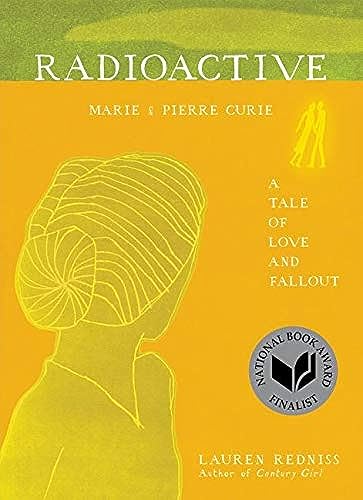
A National Book Award finalist and stunning illustrated biography, later adapted into a film.
This post contains affiliate links. As an Amazon Associate, TBB 787 earns from qualifying purchases. This helps support our mission at no extra cost to you.
Further reading: see the best books about inventors and scientists, including biographies of Marie Curie.