Disclosure: This post contains affiliate links. As an Amazon Associate, TBB 787 earns from qualifying purchases at no extra cost to you.
Introduction: The Idea That Shook the World
In the autumn of 1859, a shy, methodical, and perpetually unwell English naturalist published a book that changed how humanity understands itself and its place in the living world. Charles Darwin’s On the Origin of Species presented, for the first time, a coherent, evidence-based theory explaining how the extraordinary diversity of life on Earth came to be — and how human beings, for all their unique capabilities, are descended from the same ancestral stock as every other living creature. The theory of evolution by natural selection is today the central organizing principle of all biology, as foundational to the life sciences as Newton’s laws are to physics or Mendeleev’s periodic table is to chemistry. And yet when Darwin published it, it felt to many people like an act of intellectual violence — an assault on human dignity, religious belief, and the comfortable certainties of a world in which humanity stood at the pinnacle of a divinely ordered creation.
This is the story of the man who had the courage to follow the evidence wherever it led, even when he knew it would bring him into conflict with some of the most powerful forces in Victorian society.
Early Life: A Reluctant Student with a Passion for Nature
Charles Robert Darwin was born on February 12, 1809, in Shrewsbury, England — the same day, by remarkable coincidence, as Abraham Lincoln. He was the fifth of six children of Robert Darwin, a prosperous physician and financier, and Susannah Wedgwood, daughter of the famous pottery manufacturer Josiah Wedgwood. His was a comfortable, privileged upbringing in one of England’s most distinguished intellectual and industrial families.
From earliest childhood, Darwin was a passionate collector and naturalist — beetles, birds, stones, minerals, plants. He roamed the Shropshire countryside with insatiable curiosity, amassing collections of natural objects with the systematic thoroughness that would later characterize his scientific work. He was not, by his own account, a particularly distinguished student in the formal academic sense. At Shrewsbury School, he found the classical curriculum dull, and his father — observing what appeared to be aimless collecting and shooting — famously told him: “You care for nothing but shooting, dogs, and rat-catching, and you will be a disgrace to yourself and all your family.”
Darwin was sent to the University of Edinburgh in 1825 to study medicine, following his father and grandfather into the medical profession. He hated it. The lectures bored him; surgery performed without anesthesia (this was 30 years before ether was introduced as a surgical anesthetic) horrified him. He left Edinburgh without completing his degree and was dispatched to Christ’s College, Cambridge, to study for the clergy instead. This too bored him, but Cambridge offered him something more valuable than either medicine or theology: contact with the naturalist professors John Stevens Henslow and Adam Sedgwick, who recognized his gifts and nurtured them.
The Voyage of the Beagle: Five Years That Changed Everything
The turning point in Darwin’s life came in 1831, when his friend and mentor Professor Henslow recommended him for the position of naturalist on HMS Beagle, a Royal Navy survey ship preparing for a voyage to chart the coastlines of South America. The voyage, originally planned for two years, lasted five, and took Darwin around the world. He collected tens of thousands of specimens — plants, animals, fossils, geological samples — keeping meticulous journals and sending regular shipments of specimens back to Henslow in Cambridge. He was, by common consent of his shipmates, an indefatigable observer, a brilliant describer, and a man of unfailing good humor who bore the discomforts of the voyage — chronic seasickness, heat, insects, disease — with patient equanimity.
What Darwin saw in those five years challenged and reshaped his understanding of the natural world. In the fossil beds of Patagonia, he found the remains of giant extinct mammals — giant sloths, giant armadillos, giant rodents — that closely resembled living species in the same region. Why would a creator produce giant versions of animals currently living in the same area? In the Galápagos Islands, he found animals that were similar to but distinctly different from their counterparts on the South American mainland, and that varied in detail from island to island within the archipelago. Most famously, he found finches on different islands with differently shaped beaks, each adapted to the specific food sources available on that island.
These observations, accumulated over five years of careful, systematic observation across an extraordinary range of environments, planted the seeds of his theory. They didn’t immediately produce the theory of evolution — Darwin’s notebooks from the voyage show that he had not yet abandoned the idea of separate divine creation for each species by the time the Beagle returned to England in October 1836. But they created the empirical foundation on which the theory would be built over the following decades.
The Theory Takes Shape: Natural Selection
Back in England, Darwin spent years sorting, cataloguing, and studying his collections while his health — always fragile — began a long, puzzling decline. He consulted with expert naturalists who revealed surprising things about his Galápagos specimens: the finches he had rather carelessly labelled as separate species by island were indeed separate species — a fact that shook him. In 1837, he opened his first transmutation notebook, beginning his private investigation into the question of how species change over time.
The conceptual breakthrough — natural selection — came in 1838, when Darwin read the economist Thomas Malthus’s Essay on the Principle of Population. Malthus argued that human populations tend to grow faster than food supplies, leading inevitably to competition, scarcity, and death. Darwin extended this insight to all of nature: if more individuals are born in every generation than can possibly survive, and if individuals vary in ways that affect their survival (as he had observed in his collections), then individuals with advantageous variations would tend to survive and reproduce, passing their advantages to their offspring, while individuals with disadvantageous variations would tend to die without reproducing. Over many generations, this differential survival and reproduction would cause populations to change — to evolve.
It was an idea of devastating simplicity and explanatory power. Darwin recognized its significance immediately. He also recognized its incendiary social and religious implications, and it made him deeply anxious. He confided to a close friend: “It is like confessing a murder.” For the next twenty years, he set about building the most overwhelming case for his theory that he could assemble, dreading the inevitable storm of controversy but determined that when he finally published, he would be unassailable.
📚 Essential Darwin Books
- 📖 On the Origin of Species by Charles Darwin— The book that changed everything. Darwin’s prose is remarkably clear and engaging for a 19th-century scientific work. Reading it directly is a powerful experience — you watch one of history’s greatest scientific arguments being constructed, brick by careful brick.
 $12.33
 - 📖 Darwin: The Life of a Tormented Evolutionist by Adrian Desmond and James Moore
— The definitive modern biography of Darwin, exhaustively researched and brilliantly written. Desmond and Moore place Darwin’s science in rich social and political context, arguing that his theory was shaped by his views on slavery and human equality. A landmark work. - 📖 The Selfish Gene by Richard Dawkins
— Dawkins’ modern restatement of Darwinian evolution in terms of gene-centered selection. One of the most influential popular science books ever written. Essential for understanding where evolutionary theory has gone since Darwin.


Darwin’s Personal Life: Marriage, Health, and the Weight of a Theory
In 1839, Darwin married his cousin Emma Wedgwood, the granddaughter of the famous potter. It was a marriage of deep mutual affection and partnership, producing ten children (seven of whom survived to adulthood). Emma was a devout Christian, and Darwin’s growing conviction that his theory undermined the religious foundations she valued created a recurring tension in their marriage that both navigated with remarkable tact and love. Darwin was well aware that his theory would cause Emma pain, and this awareness deepened his reluctance to publish it. Their correspondence and diaries reveal a tender, mutually supportive relationship that endured through Darwin’s chronic illness, the death of three children, and the public controversies that surrounded his work.
Darwin’s health was a constant preoccupation throughout his adult life. From the 1840s onward, he suffered from recurrent episodes of vomiting, stomach pain, heart palpitations, eczema, and exhaustion that severely limited his productive time. The cause has been debated by doctors and historians for 150 years: theories include Chagas disease (contracted from a parasitic insect bite in South America), anxiety-related psychosomatic illness, Ménière’s disease, and several others. Whatever the cause, his illness shaped his working life profoundly — he could work for only two or three hours a day on his best days — and contributed to the deliberate slowness with which he developed and published his theory.
Publication: A Near Miss with Alfred Russel Wallace
Darwin had been slowly, painstakingly writing up his theory for years when, in June 1858, he received a letter from Alfred Russel Wallace — a younger naturalist working in the Malay Archipelago — enclosing a manuscript that outlined, in brief but clear terms, precisely the theory of natural selection that Darwin had been developing for twenty years. Darwin was devastated. Wallace had arrived at the same theory independently, and priority in science belongs to whoever publishes first. Darwin had published nothing.
His friends Charles Lyell and Joseph Hooker arranged a solution that was gentlemanly but slightly uncomfortable: Wallace’s paper and extracts from Darwin’s earlier unpublished writings were read jointly at the Linnean Society in July 1858, establishing Darwin’s priority while giving Wallace appropriate credit. Darwin then worked at extraordinary speed — by his own tortured standards — to condense his planned multi-volume treatise into a single “abstract”: the 490-page On the Origin of Species, published on November 24, 1859. All 1,250 copies of the first edition sold out on the day of publication. The scientific and public argument began immediately and has not entirely ceased to this day.
The Reception: From Controversy to Triumph
The most famous public confrontation over Darwin’s theory took place at the Oxford Museum in June 1860, at a meeting of the British Association for the Advancement of Science. Bishop Samuel Wilberforce — coached beforehand by Darwin’s opponent Richard Owen — reportedly asked Darwin’s champion Thomas Henry Huxley whether he was descended from an ape on his grandfather’s or his grandmother’s side. Huxley reportedly responded that he would rather be descended from an ape than from a bishop who used his intelligence to suppress scientific truth. The exchange became legendary and symbolized the conflict between science and religion that Darwin’s theory precipitated.
In reality, Darwin’s theory was accepted by the scientific community far more quickly and completely than this narrative of conflict suggests. Within a decade, virtually every leading biologist in Britain, Europe, and America had accepted evolution as fact, even if they debated the specifics of the mechanism. Darwin’s meticulous marshalling of evidence — fossil records, geographical distribution, comparative anatomy, embryology — was simply too comprehensive and too coherent to dismiss. What remained contested, and continues to be contested in some religious communities today, was not the scientific but the theological implication: that human beings are part of the animal kingdom, sharing ancestry with every other living creature.
Later Works and the Descent of Man
Darwin spent the years after Origin continuing to work with extraordinary productivity despite his chronic illness. He published major works on orchids, climbing plants, the formation of vegetable mould by earthworms, barnacles, and the expression of emotions in animals — each a model of patient, detailed observation and reasoning. The most controversial of his later works, The Descent of Man (1871), explicitly addressed what Origin had only implied: that human beings had evolved from earlier primate ancestors, and that the mental and moral faculties that distinguish humans from other animals are differences of degree, not kind.
🔬 Top Science and Evolution Products for Curious Minds
- 🦕 Evolution: The Story of Life on Earth (Graphic Novel)
— A visually stunning graphic novel adaptation of evolution science. Perfect for younger readers and visual learners who want to understand evolutionary biology in an engaging format. - 🔭 National Geographic Kids Encyclopedia of Animals
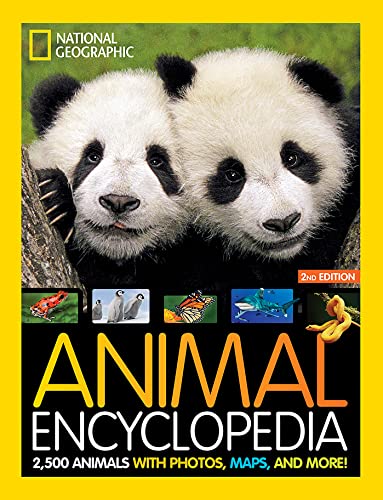
— A beautifully illustrated reference book for young naturalists. Comprehensive coverage of the animal kingdom organized in evolutionary context — a wonderful introduction to the diversity of life Darwin spent his career studying. - 🧬 The Beak of the Finch by Jonathan Weiner
— Pulitzer Prize-winning account of scientists watching evolution happen in real time among Darwin’s Galápagos finches. One of the finest popular science books ever written, and a perfect companion to Darwin’s own story.


Darwin’s Death and Lasting Legacy
Darwin died on April 19, 1882, at Down House in Kent, where he had lived and worked for 40 years. He was 73. Despite his own expressed preference for a quiet burial at Down, he was interred in Westminster Abbey — near Isaac Newton — following a campaign by his scientific colleagues and admirers. The ceremony was attended by representatives of the major scientific societies of the world.
His legacy is difficult to overstate. The theory of evolution by natural selection is the central, unifying framework of modern biology. Every advance in genetics, molecular biology, ecology, paleontology, medicine, and evolutionary psychology rests on evolutionary foundations. The discovery of DNA and the mapping of the genome have provided the molecular mechanisms that Darwin’s theory required but could not explain — confirming and extending his insights at a level of detail he could never have imagined. Modern evolutionary biology, evolutionary medicine (understanding diseases in evolutionary terms), and evolutionary psychology all trace their lineage directly to Darwin’s work.
Conclusion: Courage, Patience, and the Pursuit of Truth
Charles Darwin’s life is an object lesson in the virtues that great science requires. He was not the flashiest intellect of his era — not the mathematical wizard that Newton was, not the abstract theorist that Einstein was. What he had was something rarer and in some ways more valuable: extraordinary patience, an exhaustive commitment to evidence, the honesty to follow an argument wherever it led regardless of where it took him, and the moral courage to publish a truth he knew would cause pain and controversy. He spent twenty years building his case before he published, and when he did publish, the case was overwhelming.
He also modeled something important about the relationship between science and personal life. Darwin was not a cold, detached machine for producing scientific results. He was a loving husband and father, a warm and generous colleague, a man who felt deeply the human implications of his work and tried honestly to reckon with them. His relationship with Emma — the believing Christian and the reluctant agnostic, navigating the most profound intellectual rupture of their age together, with love and respect and honesty — is as moving as anything in Victorian literature. In his science and in his character, Charles Darwin deserves the admiration of everyone who values truth, evidence, and the courage to think.
This post contains affiliate links. As an Amazon Associate, TBB 787 earns from qualifying purchases. Thank you for supporting our content!
Explore like Darwin: Want to see the natural world up close? Read our guide to the best microscopes for kids and students.