Disclosure: This post contains affiliate links. As an Amazon Associate, TBB 787 earns from qualifying purchases at no extra cost to you.
Introduction: A Mind Beyond Its Time
In the entire history of human civilization, no figure is quite like Leonardo da Vinci. He was, in the truest sense, a universal genius — a man whose curiosity recognized no boundaries, whose investigations spanned painting, sculpture, architecture, music, anatomy, geology, botany, cartography, hydraulics, optics, engineering, and military science. He painted the two most famous paintings in the world: the Mona Lisa and The Last Supper. He designed flying machines, armored vehicles, solar power concentrators, and a primitive calculator — all of them centuries before anyone else. He produced anatomical drawings of such accuracy and insight that they were not surpassed until the age of medical imaging. He studied the flow of water, the growth of plants, the structure of mountains, the anatomy of the horse, the mechanics of the human heart, and the patterns of turbulence — all with the same restless, insatiable, perfectly focused attention.
He was also, in many ways, a man of spectacular incompleteness — someone who began far more projects than he finished, who left notebooks packed with visionary ideas that he never developed into finished works or built machines. He was simultaneously one of history’s greatest achievers and one of its most celebrated procrastinators. The tension between his boundless curiosity and his inability (or unwillingness) to bring many of his projects to completion is one of the central paradoxes of a life that has fascinated observers for five centuries.
Illegitimate Birth: A Beginning That Defined a Life
Leonardo was born on April 15, 1452, in the small Tuscan town of Vinci, outside Florence. His birth was the product of a brief liaison between Ser Piero da Vinci, a young notary from a prosperous family with a long tradition of legal service, and a peasant woman named Caterina, probably a farmer’s daughter. Leonardo was illegitimate — a status that would shape his opportunities and his self-understanding throughout his life. Because he was born out of wedlock, he was barred from many of the established career paths available to young men of his intelligence and social standing: he could not enter the legal profession, could not attend university, could not join the guilds of major trades. He received only a basic vernacular education — no Latin, no formal logic, no university mathematics.
What might have been a crippling disadvantage proved, in a way, liberating. Because Leonardo was barred from the traditional routes to learning and advancement, he was also freed from the constraints of traditional education. He taught himself everything he knew, approaching every subject with fresh eyes and an empiricist’s insistence on direct observation rather than received authority. “My master is experience,” he wrote. In a culture that regarded ancient textual authority — Aristotle, Galen, Ptolemy — as the ultimate source of knowledge, Leonardo trusted his own eyes above all. This habit of direct observation, driven partly by necessity and partly by temperament, would prove to be the foundation of everything he achieved.
Apprenticeship: Verrocchio’s Workshop
Around the age of 14, Leonardo was sent to Florence to apprentice in the workshop of Andrea del Verrocchio, one of the most prominent artists and craftsmen in Florence. Verrocchio’s bottega was not merely a painting studio but a comprehensive workshop producing sculpture, goldsmithing, armor, bells, and mechanical devices — a cross between an art studio and an engineering firm. For Leonardo, it was a perfect environment. He learned to paint and sculpt, but he also learned to cast bronze, work leather, design mechanisms, and think about practical engineering problems. He was exposed to the intellectual ferment of Medicean Florence, where artists, architects, philosophers, and scientists mixed freely and where Plato was studied alongside Vitruvius and Euclid.
Leonardo’s genius was apparent almost immediately. According to Giorgio Vasari’s famous account (written a generation after Leonardo’s death and not entirely reliable in its details), when Verrocchio saw Leonardo’s contribution to a joint painting — an angel painted with such beauty and technical mastery that it surpassed Verrocchio’s own figure — the master wept and vowed never to touch a brush again. Whether or not this is literally true, it captures the essential fact: Leonardo’s abilities quickly surpassed those of his master. He became a fully qualified master himself around 1472, at the age of 20.
The Notebooks: A Universe of Ideas
Leonardo’s approximately 7,200 surviving pages of notebooks are among the most remarkable documents in human history. They cover virtually every subject he investigated — paintings and anatomical studies alongside notes on the flow of water, designs for military machines, observations on the behavior of birds in flight, studies of the geometry of shadows, notes on geology, meteorology, botany, music, and philosophy. They are written in Leonardo’s famous mirror script — right to left, reversed, readable only in a mirror — apparently not as a deliberate code but simply because he was left-handed and writing right to left was more comfortable and prevented smearing the ink. They were never organized, never published in his lifetime, and scattered after his death. If they had been published and properly understood in the 16th century, the history of science and technology might look quite different.
Among the most astonishing entries in the notebooks are Leonardo’s designs for flying machines. He studied birds obsessively, filling pages with anatomical analyses of wing structure and musculature and with mathematical calculations of lift and thrust. He designed ornithopters — human-powered flying machines with flapping wings — that were physically impossible to fly but showed his deep understanding of aerodynamic principles. He also sketched an aerial screw — a device remarkably similar to the principle of the helicopter — and a hang-glider design. None of these could have been built successfully with the materials and power sources available in 15th-century Italy, but their conceptual foundations were essentially sound. The Wright Brothers, studying birds and building their aircraft 400 years later, were working from the same empirical tradition that Leonardo pioneered.
📚 Top Books on Leonardo da Vinci
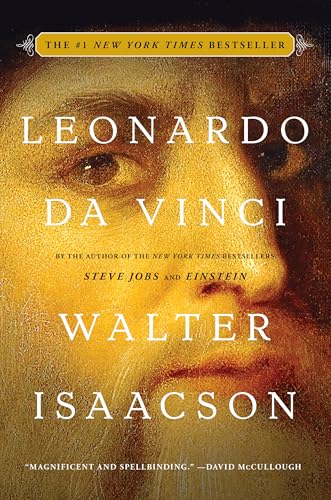
- 📖 Leonardo da Vinci by Walter Isaacson— Isaacson’s magnificent biography of Leonardo, based on his study of the original notebooks. Richly illustrated, beautifully written, and deeply insightful about what made Leonardo’s mind unique. The best modern introduction to Leonardo available — a book you will return to repeatedly.
 $19.29
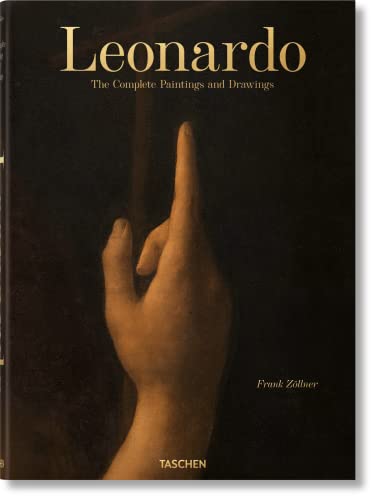
 - 📖 Leonardo da Vinci: The Complete Paintings and Drawings — A comprehensive illustrated catalog of Leonardo’s surviving artistic work. Stunning reproductions of the paintings, drawings, and sketches, with detailed scholarly commentary. A beautiful reference work for any admirer of Leonardo’s art.
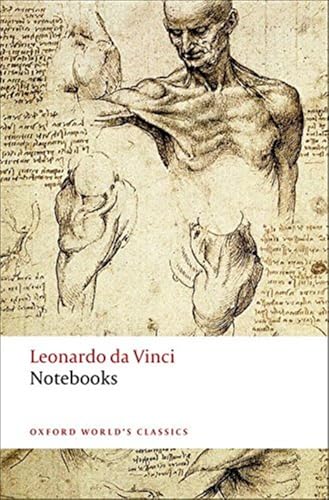
- 📖 The Notebooks of Leonardo da Vinci — Selections from Leonardo’s notebooks in modern English translation. Reading Leonardo’s own words — his observations, his questions, his self-criticisms, his visionary speculations — is a remarkable experience. Essential for anyone who wants direct access to his extraordinary mind.
The Mona Lisa: A Painting That Changed Everything
The Mona Lisa is the most famous painting in the world. It hangs in the Louvre behind bulletproof glass, viewed by roughly six million visitors a year. It has been studied, analyzed, x-rayed, debated, and mythologized more than any other artwork in human history. And for all that attention, it continues to reward examination — because it is technically extraordinary, psychologically complex, and scientifically innovative in ways that no other painting of its era approaches.
The subject of the painting — almost certainly Lisa Gherardini, wife of the Florentine merchant Francesco del Giocondo, hence the Italian name La Gioconda — is rendered with a psychological subtlety that no previous artist had achieved. Her expression is famously ambiguous, appearing to shift between a smile and something more enigmatic depending on where the viewer’s gaze is directed — an effect created by Leonardo’s deliberate use of sfumato (from the Italian for “smoke” or “faded”), a technique of applying extremely thin, almost transparent glazes of paint to create gradations of tone and color so subtle that they blur the boundaries between forms, mimicking the way the human eye actually perceives objects in peripheral vision.
The landscape behind the figure is equally remarkable: a geological fantasy of eroded rock formations, winding rivers, and misty mountains that seems to belong to a different, deeper time than the foreground. Leonardo was one of the first artists to understand that the atmosphere itself has color — that distant objects appear bluish and hazy because light scatters in the air between the viewer and the distant landscape (what we now call atmospheric or aerial perspective). His rendering of this effect in the Mona Lisa’s background is so technically accomplished that it was not surpassed for generations.
The Last Supper: Monumental and Doomed
The Last Supper, painted on the refectory wall of the convent of Santa Maria delle Grazie in Milan between approximately 1495 and 1498, is widely considered the greatest narrative painting ever created. It depicts the moment described in the Gospel of John when Jesus announces to his disciples that one of them will betray him — capturing the psychological explosion of shock, denial, grief, and outrage that rippled through the twelve apostles in response to this announcement. Leonardo arranged the figures in groups of three, each group animated by a different emotional response to Jesus’s words, creating a narrative that unfolds across the full width of the wall like a cinematic sequence of reactions.
Tragically, the painting began deteriorating almost immediately after completion. Leonardo, unwilling to work in the fast-drying fresco technique that required painting on wet plaster, experimented with a tempera-based technique on dry plaster — a technique that proved far less durable. Within 20 years, visitors were already describing significant deterioration. Despite centuries of restoration attempts (some of which made things considerably worse), today’s visitor sees a painting that is substantially compromised compared to its original state. Yet even in its damaged condition, the power of Leonardo’s compositional and psychological achievement is unmistakable.
Anatomy: Seeing the Human Body New
Leonardo’s anatomical studies are among the greatest achievements of his extraordinary career. Beginning in Florence and continuing in Milan, he performed dozens of human dissections — often secretly, in defiance of social taboos, working at night in hospital morgues — and recorded his observations with a combination of artistic mastery and scientific precision that was not equaled for centuries. His drawings of the human skeleton, muscles, heart, lungs, brain, fetus in the womb, and circulatory system are so accurate and so beautifully rendered that they were used as teaching materials in medical schools well into the 20th century.
His study of the heart was particularly visionary. He understood the heart as a muscle, not (as was then believed) as the seat of the soul or the source of body heat. He described the function of the heart valves, traced the flow of blood through the chambers, and created wax models of the interior of the heart by injecting wax into a dead ox’s heart and allowing it to set. He came remarkably close to understanding the circulation of the blood — a discovery that waited for William Harvey in 1628. If his anatomical notebooks had been published, they would have transformed Renaissance medicine.
Engineering Visions: Centuries Ahead
Among the most astonishing pages in Leonardo’s notebooks are his engineering designs. He designed a robot knight in armor, capable of making a range of movements, apparently for use in courtly entertainments. He designed a mechanical lion that could walk and open its chest to reveal a fleur-de-lis — a diplomatic gift for the French king. He designed diving suits, self-propelled carts (essentially primitive automobiles), machine guns with multiple barrels, giant crossbows, armored fighting vehicles (essentially primitive tanks), double-hulled ships, steam-powered cannons, hydraulic machinery for cutting and shaping materials, and an extensible ladder for use in military sieges.
The helicopter-like aerial screw, the hang glider, the solar energy concentrator (an enormous curved mirror designed to focus the sun’s rays to boil water for industrial purposes) — these designs speak to a mind operating at a conceptual level that his era simply could not accommodate. The materials, the manufacturing techniques, and the power sources needed to bring most of these ideas to physical reality did not exist. Leonardo conceived a world that would only come into being four or five centuries after his death.
🎨 Great Leonardo-Inspired Products
- 🖼️ Mona Lisa Large Canvas Print — Classic Art for Home and Office— Bring Leonardo’s masterpiece into your space. A high-quality, museum-grade canvas reproduction of the Mona Lisa. Perfect for art lovers, history enthusiasts, and anyone who wants to add a touch of Renaissance genius to their walls.
- 【Famous Paintings Wall Art】This wall art canvas depicts ‘Mona Lisa’, one of the most recognizable paintings by famous ar…
- 【Leonardo DaVinci Mona Lisa Poster】Giclee printing on polyester canvas, waterproof, UV resistant, fading resistant, dust…
- 【Leonardo DaVinci Paintings】The famous paintings wall art Mona Lisa by Leonardo DaVinci is a nice art posters for classr…
$15.21 - 🔬 Da Vinci’s Flying Machine Model Kit — Build Leonardo’s Ornithopter— Construct a scale model of Leonardo’s famous flying machine design. A wonderful hands-on activity for engineering enthusiasts and history lovers of all ages. See Leonardo’s vision take physical form in your hands.
- A flying machine of Leonardo da Vinci inspired by birds
- You can move the wings using the conversion of rotary motion into reciprocating motion from another invention of Leonard…
- Wind up to store power and pull the lever to watch it go
$18.17 - 📐 Think Like Leonardo da Vinci by Michael Gelb — A practical guide to developing the seven principles of Leonardo’s genius in your own thinking and creative life. One of the most popular creativity books of the past 25 years. A wonderful companion to any biography of Leonardo.


Later Life: Milan, Rome, and France
Leonardo spent much of his career working for powerful patrons who valued his versatility as much as his artistry: Lodovico Sforza, Duke of Milan; Cesare Borgia (as military engineer); the Florentine republic; and Pope Leo X in Rome. In each context, he was expected to produce paintings, sculptures, architectural designs, and engineering solutions on demand — a range of demands that suited his polymathic nature even as it frustrated his patrons, who found his perfectionism and his tendency to abandon projects maddening.
His final years were spent in France, where King Francis I — one of the greatest royal patrons of the arts in European history — invited him to serve as “Premier Painter, Engineer, and Architect of the King” and gave him the use of the Chateau du Clos Luce near Amboise, connected by an underground tunnel to the royal residence. Francis reportedly spent hours in conversation with the old master, later describing him as the greatest man who had ever lived. Leonardo brought his final paintings — the Mona Lisa, the St. John the Baptist, and the St. Anne with the Virgin and Child — to France, and worked on them, retouching and refining, until the end.
Conclusion: What Leonardo Teaches Us
Leonardo da Vinci died on May 2, 1519, at the age of 67, reportedly in Francis I’s arms (though this story may be apocryphal). He left behind a body of work — approximately 15 surviving paintings, thousands of notebook pages, and the deep imprint of his example on the artists and thinkers who came after him — that continues to inspire and astonish more than 500 years after his death.
The lesson of Leonardo’s life is not simply that genius is possible — we knew that. It is that curiosity, pursued without limit or apology, in every direction that presents itself, is the foundation of all great achievement. Leonardo’s notebooks are full of questions: “Why is the sky blue? What causes turbulence in flowing water? How does the eye see? What gives a mountain its shape?” He approached every question with the same freshness, the same willingness to look directly and carefully and to report honestly what he saw. He was never satisfied with received answers. He never stopped asking. The result was a mind that encompassed, in one extraordinary lifetime, more of human knowledge and creative possibility than almost anyone before or since. His notebooks, scattered and neglected for centuries, are now recognized as one of the great treasures of human civilization — a testament to what an unlimited mind, freed from prejudice and devoted to the evidence of its own senses, can discover about the world.
This post contains affiliate links. As an Amazon Associate, TBB 787 earns from qualifying purchases. Thank you for supporting our work!