Disclosure: This post contains affiliate links. As an Amazon Associate, TBB 787 earns from qualifying purchases at no extra cost to you.
Introduction: Humanity Looks Up
On the night of October 4, 1957, a silver sphere the size of a beach ball beeped its way across the skies over the Soviet Union and into world history. Sputnik 1 — the first artificial satellite to orbit the Earth — circled the globe every 96 minutes, its simple radio signal audible to amateur radio operators around the world as a steady, insistent beep-beep-beep. It weighed just 184 pounds. It carried no scientific instruments beyond the radio transmitter. It could do nothing except orbit and beep. And yet its impact on the world was seismic: Sputnik launched the Space Race, transformed the cold war between the United States and the Soviet Union into a technological competition with civilizational stakes, and set humanity on the path that would culminate, 12 years later, in the most extraordinary achievement in human history — two men standing on the surface of the Moon.
The story of space exploration is one of the most gripping in all of human history: a tale of visionary scientists and engineers, political brinkmanship, extraordinary courage, technical brilliance, catastrophic failure, and ultimately triumphant success. It is also the story of what human beings can achieve when they set themselves a goal that seems impossible and refuse to accept that it cannot be done.
The Dreamers: Rocketry’s Visionary Pioneers
Before there was a space race, there were dreamers. The theoretical foundations of spaceflight were laid decades before it became a serious engineering project, by three men working largely independently in three different countries: Konstantin Tsiolkovsky in Russia, Robert Goddard in the United States, and Hermann Oberth in Germany.
Tsiolkovsky, a largely self-taught mathematics teacher who lived in a log cabin outside Moscow, published the first rigorous mathematical theory of rocket propulsion in 1903 — the same year the Wright Brothers made their first powered flight. He derived the rocket equation (still known as the Tsiolkovsky rocket equation) that describes how a rocket’s velocity depends on the ratio of its initial mass to its final mass, establishing the theoretical basis for all subsequent rocketry. He envisioned multi-stage rockets, space stations, and the colonization of the solar system with remarkable accuracy, and wrote extensively about his dreams in papers that were largely ignored during his lifetime. “Earth is the cradle of humanity,” he wrote, “but mankind cannot stay in the cradle forever.” Few sentences in the history of science have proven more prophetic.
Robert Goddard, a physics professor at Clark University in Massachusetts, was the first person to design, build, and fly a liquid-fueled rocket. On March 16, 1926, in a snow-covered field in Auburn, Massachusetts, Goddard’s rocket rose 41 feet into the air, reaching a speed of 60 miles per hour and traveling 184 feet before descending and landing in a cabbage patch. It was, in its modest way, as historic as the Wright Brothers’ first flight. Goddard spent the next two decades developing liquid-fuel rocketry, pioneering many of the technologies — gyroscopic stabilization, clustered engines, regenerative cooling — that would be used in every subsequent rocket design. He was ridiculed by the New York Times (“a man who doesn’t know the relation of action to reaction,” the paper wrote, sniffing at his claims that rockets could work in the vacuum of space) and worked in relative obscurity, but his technical contributions were foundational.
German Rocketry and the V-2: Genius in Service of Destruction
The most direct technical lineage to the rockets that reached the Moon ran through wartime Germany. The German Army’s enthusiasm for rocketry (artillery was restricted by the Versailles Treaty; rockets were not) supported a team of brilliant young engineers at the Peenemünde facility on the Baltic coast, led by the charismatic and morally complex Wernher von Braun. The result was the A-4 rocket — renamed the V-2 for propaganda purposes — the world’s first long-range ballistic missile, which first flew successfully in October 1942 and later rained destruction on London, Antwerp, and other Allied cities.
The V-2 was an extraordinary technical achievement: 46 feet tall, powered by a turbopump-fed liquid oxygen and ethanol engine that generated 56,000 pounds of thrust, capable of reaching altitudes above 50 miles (technically entering space by most definitions) and striking targets 200 miles away at speeds of 3,500 miles per hour. More than 3,000 were fired against Allied targets in the final year of the war, killing approximately 9,000 people. They were also built using the forced labor of concentration camp inmates — approximately 20,000 of whom died during their construction. Von Braun’s knowledge of and responsibility for this atrocity has been debated by historians ever since.
When Germany fell in 1945, the United States and Soviet Union raced to capture V-2 technology, blueprints, and engineers. The Americans brought von Braun and over 100 German rocket engineers to the United States under Operation Paperclip; the Soviets captured the Peenemünde facilities and their own German experts. The Space Race was, in its origins, a competition between captured German technology and the engineers who had built it.
📚 Essential Space Exploration Books
- 📖 Rocket Men: The Daring Odyssey of Apollo 8 by Robert Kurson — A riveting account of the first mission to orbit the Moon. Apollo 8’s astronauts were the first humans to leave Earth’s gravitational sphere, see the whole Earth from space, and orbit another world. Kurson’s narrative is as thrilling as any adventure novel.
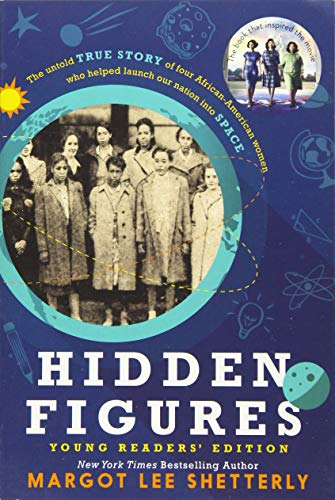
- 📖 Hidden Figures by Margot Lee Shetterly — The extraordinary true story of the Black women mathematicians — Katherine Johnson, Dorothy Vaughan, Mary Jackson — whose calculations were essential to NASA’s early successes. A landmark of popular history and an inspiring story of intelligence, determination, and the quiet power of doing your work brilliantly.
- 📖 Endurance: A Year in Space, A Lifetime of Discovery by Scott Kelly — Astronaut Scott Kelly’s account of his year aboard the International Space Station. Compelling, honest, and full of astonishing detail about what it actually feels like to live and work in orbit.


Sputnik and the Space Race Begins
The Soviet space program, under the direction of the brilliant and autocratic chief designer Sergei Korolev (whose identity was kept secret by the Soviet government, who referred to him publicly only as “the chief designer”), moved faster in the early years of the Space Race. Sputnik 1 in October 1957 was followed one month later by Sputnik 2, which carried the first living creature to orbit Earth: a dog named Laika. (Laika died within hours of launch from overheating, a fact the Soviets concealed for decades.) The psychological impact in the United States was enormous. If the Soviets could put a satellite in orbit, what else could they do? The fear that Soviet rockets capable of launching satellites might also be capable of delivering nuclear warheads to American cities accelerated the Space Race from a scientific competition into a matter of national survival.
The American response was initially chaotic. The Navy’s Vanguard rocket, rushed to the launch pad to respond to Sputnik, exploded on the launch pad in December 1957 in full view of the world’s press. The Soviet-educated press mockingly dubbed it “Flopnik” and “Kaputnik.” The Army’s team, led by von Braun, succeeded in launching America’s first satellite — Explorer 1 — on January 31, 1958. Explorer 1 made a significant scientific discovery that somewhat compensated for the embarrassment of being second: it detected the Van Allen radiation belts, zones of intense radiation trapped by the Earth’s magnetic field that would pose significant hazards to spacecraft and astronauts traveling to the Moon.
The Right Stuff: Mercury, Gemini, and the Making of Astronauts
In 1958, NASA was established to coordinate the American civilian space program. The first American astronauts — the Mercury Seven, selected in 1959 — were military test pilots: Alan Shepard, Gus Grissom, John Glenn, Scott Carpenter, Wally Schirra, Gordon Cooper, and Deke Slayton. They were celebrated as national heroes before they had flown a single space mission, symbols of American courage and technical prowess in the face of Soviet challenge. Tom Wolfe’s account of their training and culture in The Right Stuff remains the most vivid portrait of the early astronaut corps ever written.
The first American in space was Alan Shepard, whose 15-minute suborbital flight on May 5, 1961, was overshadowed by the fact that the Soviets had already sent Yuri Gagarin on a full orbital flight three weeks earlier, on April 12, 1961. Gagarin — whose broad smile and easy charm made him an instant global celebrity — had orbited the Earth once, in a flight of 108 minutes, before returning safely to land (he ejected from his capsule and parachuted separately, a fact the Soviets initially concealed to preserve their priority claim under international aviation rules). His flight remains the greatest single achievement in the history of space exploration.
Kennedy’s Challenge: “We Choose to Go to the Moon”
On May 25, 1961, less than three weeks after Shepard’s suborbital hop, President John F. Kennedy stood before Congress and issued one of the boldest challenges in the history of democratic governance: “I believe that this nation should commit itself to achieving the goal, before this decade is out, of landing a man on the Moon and returning him safely to the Earth.” The challenge was audacious to the point of recklessness. The United States had 15 minutes of human spaceflight experience. Nobody knew with confidence whether humans could survive in space for the 8-day duration a Moon mission would require. The rockets, the spacecraft, the computers, the spacesuit technology, the navigation systems, the landing techniques — none of it existed yet. Kennedy was committing the nation to inventing everything from scratch and doing it within nine years.
The funding that followed was extraordinary: at its peak, the Apollo program consumed roughly 4% of the entire U.S. federal budget — equivalent today to approximately $200 billion per year. It employed 400,000 people across NASA and the aerospace contractor network. It drove advances in computing, materials science, manufacturing, communications, and medicine that continue to benefit the world today. And it succeeded.
Apollo 11: One Giant Leap
Apollo 11 launched on July 16, 1969, carrying Neil Armstrong, Buzz Aldrin, and Michael Collins toward the Moon. On July 20, the lunar module Eagle — with Armstrong and Aldrin aboard while Collins orbited above in the command module — descended toward the surface of the Moon. The navigation computer threw a series of alarm codes that no one in mission control had ever seen before (they meant the computer was overloaded with tasks but was intelligently shedding lower-priority ones — a software design feature that saved the mission). Armstrong, taking manual control, guided the Eagle over a boulder-strewn crater that would have disabled the spacecraft, found a clear flat landing area, and set down with 20 seconds of fuel to spare.
“Houston, Tranquility Base here. The Eagle has landed.” In mission control, young engineers who had been trained never to show emotion wept openly. Six and a half hours later, Armstrong descended the lunar module’s ladder and placed his boot on the surface of the Moon. An estimated 600 million people — roughly one fifth of humanity at the time — watched on television. “That’s one small step for [a] man, one giant leap for mankind.” The words were slightly garbled in transmission, but the moment was crystalline: humanity had left its home world and stood on another. It remains the most extraordinary single achievement in the history of our species.
🚀 Space-Themed Products for Enthusiasts
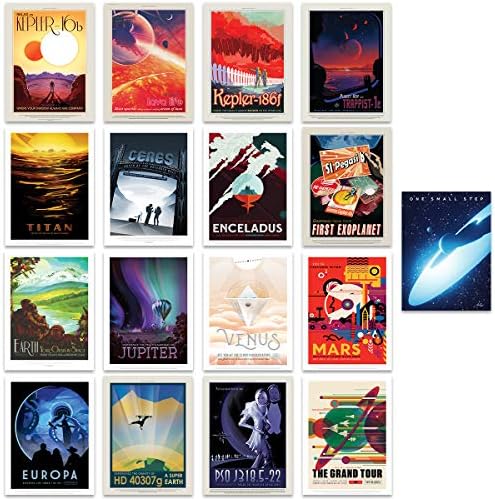
- 🌙 NASA Space Exploration Poster Set — Apollo Mission Art Prints— Beautiful, officially licensed NASA mission art prints commemorating Apollo and other landmark missions. Perfect for offices, children’s rooms, classrooms, and anywhere that celebrates human achievement. A wonderful gift for space enthusiasts.

- This pack contains 17 high-quality reproduction art prints.
- Dimensions: 12 x 16 inches (30 x 41 cm).
- Printed on Premium Art Paper.
$24.99 - 🔭 Celestron 70mm Travel Telescope — See the Moon Up Close— An excellent beginner’s telescope that lets you see lunar craters, Saturn’s rings, and Jupiter’s moons with your own eyes. One of the most satisfying science experiences available, and a perfect gateway to a lifelong interest in astronomy. Great for kids and adults alike.
- BRIGHT, SHARP VIEWS ANYWHERE: Unlike many beginner telescopes, this quality refractor features fully coated glass lenses…
- PERFECT FIRST TELESCOPE FOR BEGINNERS: Designed for adults and kids to enjoy together, this beginner-friendly telescope …
- EASY NO-TOOL SETUP: No complicated assembly or tools needed. The full-height tripod and telescope tube set up in seconds…
$99.99 - 🎮 Kerbal Space Program 2 — PC Game of Rocket Science and Space Exploration — Build rockets, plan missions, and explore the solar system in the world’s most scientifically accurate space exploration game. Beloved by engineers and space enthusiasts around the world. NASA employees have called it the best education in orbital mechanics available outside a university.

After Apollo: The Space Shuttle, ISS, and the New Space Age
After the triumph of Apollo, the American space program struggled to sustain public and political support. The final three planned Apollo missions were cancelled. The Space Shuttle — designed as a reusable, economical alternative to expendable rockets — proved far more expensive and complex than projected, and two of the five operational orbiters were destroyed in the Challenger disaster (1986) and Columbia disaster (2003), killing all 14 crew members. Yet the Shuttle also enabled the construction of the International Space Station — the largest structure ever assembled in space — and the launch and servicing of the Hubble Space Telescope, whose images of the deep universe have fundamentally transformed cosmology and inspired a generation of scientists.
The 21st century has brought a new revolution in spaceflight: the rise of commercial space companies. SpaceX, founded by Elon Musk in 2002, has achieved a series of milestones previously thought impossible for a private company: fully reusable rockets, regular cargo and crew deliveries to the ISS, and the development of the Starship vehicle aimed at Mars colonization. Blue Origin, founded by Jeff Bezos, is pursuing a similar agenda. The cost of reaching orbit has fallen dramatically, and the pace of space exploration — by satellites, probes, rovers, and eventually crewed missions — is accelerating rapidly.
Conclusion: An Endless Frontier
The story of space exploration is, at its heart, a story about what human beings are capable of when we dream big enough and work hard enough and refuse to accept the verdict of impossibility. The 12 years between Sputnik and the Moon landing — from a beeping beach ball in orbit to two humans standing on another world — represent perhaps the most concentrated burst of technological achievement in human history. And the story is far from over. Mars awaits. The asteroids await. The moons of Jupiter and Saturn — some of which may harbor liquid water and possibly even life — await. The endless frontier that Kennedy invoked in 1961 is still endless. The question is not whether we will explore it, but when. And the dreamers — the Tsiolkovskys and Goddards and von Brauns and Korolevs of the next generation — are already at work.
Bring the Space Race Home
If reading about Sputnik and Apollo has you wanting to look up at the sky yourself, a beginner telescope is a genuinely great way to start:

A well-reviewed beginner telescope from Celestron, a trusted name in amateur astronomy, complete with a backpack and smartphone adapter for capturing your own photos of the night sky.
This post contains affiliate links. As an Amazon Associate, TBB 787 earns from qualifying purchases. Thank you for supporting TBB 787!
See the sky yourself: our guide to the best smart telescopes shows how to photograph nebulae and galaxies from your backyard.