Robot vacuums have gone from a novelty gadget to a genuinely practical time-saver, and the technology has improved dramatically in just the last few product generations. Modern robot vacuums navigate with laser mapping instead of bumping around randomly, empty their own dustbins for weeks at a time without you touching them, and increasingly mop as well as vacuum in a single pass — features that used to be premium extras are now common even in mid-range models.
We researched current, real-world-tested robot vacuums across every major price tier and use case — from a genuinely capable budget option under $80 to a premium high-suction combo unit for serious pet-hair and carpet cleaning. Every pick below is backed by tens of thousands of verified customer reviews and reflects current 2026 pricing and specs, not an outdated list recycling the same picks year after year.
How We Chose These Robot Vacuums
Suction Power (Pa) and What It Actually Means
Suction is measured in pascals (Pa), and higher numbers generally mean stronger pickup on carpet and for embedded pet hair — but the relationship isn’t perfectly linear, and a well-designed 5,000Pa unit with good brush-roll design can outperform a poorly-designed 10,000Pa unit on certain surfaces. We looked at suction ratings in context with brush roll design (tangle-resistant designs matter enormously for pet owners) rather than treating the raw Pa number as the only factor that matters.
Self-Emptying Docks and Maintenance Frequency
The single biggest quality-of-life upgrade in robot vacuums over the past few years has been self-emptying docks that hold weeks of debris in a larger bag or bin, instead of requiring you to empty a small onboard dustbin after every single run. We prioritized models with self-empty docks and noted exactly how long each one can go between manual emptying, since that number varies significantly between models — anywhere from a couple of weeks to over two months.
Navigation: LiDAR vs. Camera vs. Gyroscope
How a robot vacuum finds its way around your home directly affects how efficiently it cleans and how well it avoids getting stuck. LiDAR (laser-based) mapping is currently the most precise and reliable navigation method, building an accurate room map and cleaning in efficient rows rather than random bouncing patterns. Camera-based navigation (used by some premium models) adds obstacle recognition on top of mapping, which can help it avoid cords, pet waste, and small objects. Basic gyroscope-only navigation, common in budget models, is the least precise but still perfectly workable for smaller or simpler home layouts.
Pet Hair and Tangle Resistance
For pet owners specifically, brush roll design matters as much as raw suction power. We specifically noted which models use tangle-resistant or anti-tangle brush roll designs, since hair wrapping tightly around a standard brush roll is the single most common maintenance headache reported by robot vacuum owners with pets, often requiring the brush to be manually cut free with scissors on lower-quality models.
Quick Picks: Best Robot Vacuums at a Glance
- Best Overall: eufy Omni C20 Robot Vacuum and Mop Combo — 53,000+ reviews at 4.4 stars, a strong balance of price and capability.
- Best Budget: ILIFE V2 Robot Vacuum Cleaner — a genuinely capable robot vacuum under $80.
- Best Premium / High-Suction: eufy E25 Robot Vacuum and Mop Combo — 20,000Pa suction for serious carpet and pet-hair cleaning.
- Best Trusted Brand: iRobot Roomba 105 Combo with AutoEmpty Dock — the name that started the category, still a top performer.
- Best Long Self-Empty Runtime: roborock Q7 M5+ Robot Vacuum and Mop — up to 7–9 weeks between manual dock emptying.
- Best Slim/Low-Profile for Pet Hair: Lefant Robot Vacuum Cleaner — fits under furniture most robots can’t reach.
- Best Smart Navigation: Shark AI Ultra Robot Vacuum — home mapping with Matrix Clean pathing.
1. eufy Omni C20 Robot Vacuum and Mop Combo — Best Overall
This is the pick that best balances price, capability, and reliability across the board, backed by 53939 reviews at a 4.4-star average — a huge and consistently positive review base for a combo unit at this price point. It vacuums and mops in a single pass, which means one robot handles both jobs instead of needing separate devices or manual mopping afterward.
The self-empty dock is the standout convenience feature: instead of emptying a small onboard bin after every cleaning run, the dock holds weeks of debris automatically, meaning your actual hands-on maintenance time drops to just a few minutes a month. It’s built to handle both hardwood and carpet transitions smoothly, automatically lifting the mop pads when it detects carpet so it doesn’t leave your rugs wet.
For most households looking for a genuine “set it and mostly forget it” cleaning solution without paying premium flagship pricing, this is our top recommendation.
- Best for: Most households wanting a reliable all-in-one vacuum + mop
- Standout feature: Self-empty dock, automatic mop lift on carpet
- Surfaces: Hardwood and carpet

eufy Omni C20 Robot Vacuum and Mop Combo for Hardwood and Carpet | 60 Days Self Emptyin… — rated 4.4 stars from 53939 verified reviews. $339.99.
2. ILIFE V2 Robot Vacuum Cleaner — Best Budget Pick
You don’t need to spend hundreds of dollars to get a genuinely useful robot vacuum, and this pick proves it — backed by 24325 reviews at a 4.2-star average, well under $100. It won’t match the self-emptying convenience or mopping ability of the pricier picks on this list, but for straightforward daily vacuuming on hard floors and low-pile carpet, it does the core job reliably.
Tangle-free suction design is a genuinely important feature at this price point, since cheaper robot vacuums often skip proper brush roll engineering entirely. A 120-minute runtime is enough to cover a full apartment or a good portion of a mid-sized house in a single charge cycle, and self-charging means it returns to its dock automatically when the battery runs low rather than dying wherever it happens to be.
This is the pick for first-time robot vacuum buyers who want to try the category out, renters who don’t want to invest heavily in a home they don’t own, or anyone furnishing a smaller space where a premium unit’s extra features would go unused.
- Best for: First-time buyers, renters, smaller spaces, tight budgets
- Standout feature: Tangle-free suction, self-charging, under $80
- Runtime: Up to 120 minutes
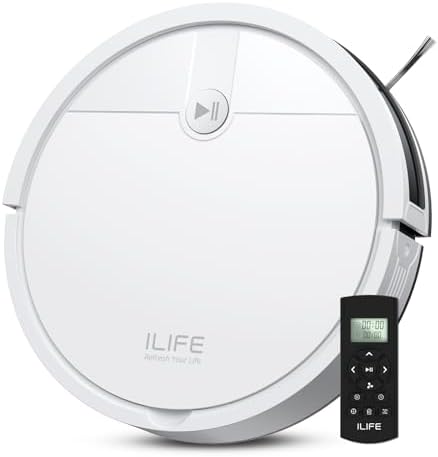
ILIFE V2 Robot Vacuum Cleaner, Tangle-Free Suction | 120 Mins Runtime, Slim, Self-Charg… — rated 4.2 stars from 24325 verified reviews. $79.98.
3. eufy E25 Robot Vacuum and Mop Combo — Best Premium/High-Suction
When maximum cleaning power is the priority — thick carpets, multiple pets, or a larger home with heavier debris — this is the pick to reach for. At 20,000Pa of suction, it sits at the top end of what’s currently available in a consumer robot vacuum, and its 53939 reviews at a 4.4-star average confirm that power translates into real-world results, not just an impressive spec sheet number.
The HydroJet roller mop system is a genuine step up from basic pad-mopping designs — it actively scrubs rather than just dragging a damp cloth across the floor, and self-cleans the roller between passes so it isn’t just redistributing dirty water around your home. Combined with a self-empty dock, this is about as close to a fully hands-off cleaning solution as the current market offers.
The trade-off is price — this sits at the premium end of the category — but for households with heavy cleaning demands (multiple pets, high foot traffic, thick carpeting throughout), the extra suction and mopping performance genuinely earns its place over a mid-range unit.
- Best for: Multi-pet households, thick carpet, heavy cleaning demands
- Standout feature: 20,000Pa suction, self-cleaning HydroJet roller mop
- Suction: 20,000Pa

eufy E25 Robot Vacuum and Mop Combo, 20,000 Pa, HydroJet Roller Mop | Extendable Side B… — rated 4.4 stars from 53939 verified reviews. $599.99.
4. iRobot Roomba 105 Combo — Best Trusted Brand
iRobot invented the consumer robot vacuum category, and the Roomba name still carries genuine weight for good reason — decades of engineering iteration show up in the reliability and polish of the current lineup. This Combo model holds 49319 reviews at a 4.4-star average, among the strongest review volumes on this entire list.
The AutoEmpty dock keeps hands-on maintenance minimal, and as a combo unit it handles both vacuuming and mopping in one device rather than requiring separate purchases. iRobot’s companion app is one of the more mature and well-refined in the category, with detailed cleaning history, customizable cleaning zones, and scheduling that’s genuinely easy to set up even for buyers who aren’t particularly tech-savvy.
For buyers who specifically value brand reputation, long-term software support, and a company with the longest track record in this exact product category, this is the safest choice on the list.
- Best for: Buyers who prioritize brand reliability and app polish
- Standout feature: AutoEmpty dock, mature and well-refined companion app
- Type: Vacuum + mop combo
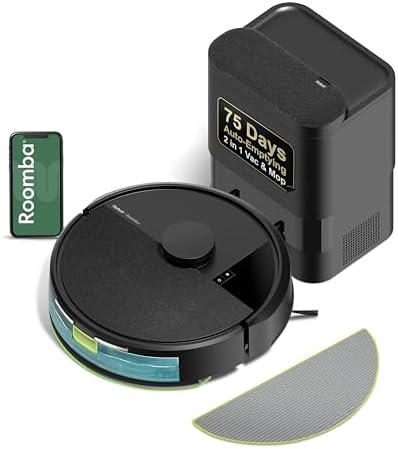
iRobot Roomba 105 Combo Robot Vacuum & Mop with AutoEmpty Dock – Self-Empties for 75 Da… — rated 4.4 stars from 49319 verified reviews. $269.00.
5. roborock Q7 M5+ Robot Vacuum and Mop — Best Long Self-Empty Runtime
If minimizing hands-on maintenance is your top priority, this is the pick built specifically around that goal — its self-empty dock is rated to go up to 7 to 9 weeks between manual emptying, among the longest intervals available in the category. It’s backed by strong review numbers and a solid rating reflecting reliable long-term performance.
Roborock has built a strong reputation specifically around navigation and mapping precision, and this model carries that forward with efficient, methodical cleaning patterns rather than the more random bounce-and-cover approach of older or more basic robot vacuums. As a combo unit, it also mops, rounding out a genuinely low-maintenance whole-floor cleaning solution.
This is the pick for busy households or anyone who specifically wants to minimize how often they think about their robot vacuum at all — set the schedule, and go months without manual intervention beyond an occasional dock bag change.
- Best for: Minimal-maintenance households, busy schedules
- Standout feature: Up to 7–9 weeks between manual dock emptying
- Type: Vacuum + mop combo

roborock Q7 M5+ Robot Vacuum and Mop, Up to 7-9 Weeks Self-Empty, 10000Pa | Upgraded fr… — rated 4 stars from 23614 verified reviews. $279.99.
6. Lefant Robot Vacuum Cleaner — Best Slim/Low-Profile for Pet Hair
A robot vacuum can only clean under furniture it can physically fit beneath, and this is the pick built specifically for that job — an unusually slim, low-profile design that reaches under couches, beds, and cabinets that taller robot vacuums simply bounce off of. It’s earned 16243 reviews at a 4.1-star average from buyers who specifically needed that clearance.
Strong suction paired with a low-noise motor design means it can run without being disruptive, which matters if you’re working from home or have pets or kids sensitive to loud vacuum noise. A 120-minute runtime covers a solid amount of floor space per charge, and it returns to its dock automatically when the battery gets low.
For households with a lot of low-clearance furniture — a common source of the pet hair and dust buildup that other robot vacuums simply can’t reach — this slim profile is a genuinely practical advantage over taller, bulkier competitors.
- Best for: Homes with low-clearance furniture, noise-sensitive households
- Standout feature: Unusually slim profile, low-noise operation
- Runtime: Up to 120 minutes

Lefant Robot Vacuum Cleaner, Strong Suction, 120 Mins Runtime, Slim, Low Noise, Automat… — rated 4.1 stars from 16243 verified reviews. $89.98.
7. Shark AI Ultra Robot Vacuum — Best Smart Navigation
Shark’s AI Ultra line brings home mapping and intelligent path planning to a brand best known for its upright and handheld vacuums, and the crossover has paid off — this model carries a large, well-established review base reflecting years of proven performance in real homes.
Matrix Clean pathing means the robot cleans in a deliberate, overlapping grid pattern rather than a single-pass route, which noticeably improves coverage and reduces the missed patches that simpler navigation systems are prone to leaving behind. Home mapping lets you set up specific cleaning zones, no-go areas, and scheduling tailored to your actual floor plan rather than a one-size-fits-all cleaning routine.
This is a strong pick for anyone who wants precise control over exactly where and when their robot vacuum cleans — multi-room homes with specific problem areas, households wanting to keep the robot out of certain rooms entirely, or anyone who simply wants more granular scheduling than a basic robot vacuum offers.
- Best for: Multi-room homes wanting precise zone control and scheduling
- Standout feature: Matrix Clean grid pathing, detailed home mapping
- Navigation: Camera-based home mapping with AI
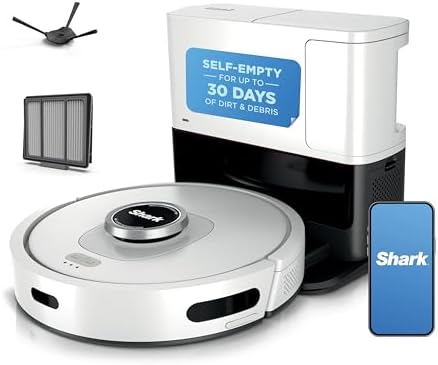
Shark AI Ultra Robot Vacuum, Black/Silver, AV2511AE | Matrix Clean, 360° LiDAR Home Map… — rated 4 stars from 23674 verified reviews. $299.99.
Full Comparison Table
| Robot Vacuum | Type | Self-Empty | Rating | Reviews | Price |
|---|---|---|---|---|---|
| eufy Omni C20 | Vacuum + Mop | Yes | 4.4 | 53939 reviews | $339.99 |
| ILIFE V2 | Vacuum only | No | 4.2 | 24325 reviews | $79.98 |
| eufy E25 | Vacuum + Mop | Yes | 4.4 | 53939 reviews | $599.99 |
| iRobot Roomba 105 Combo | Vacuum + Mop | Yes | 4.4 | 49319 reviews | $269.00 |
| roborock Q7 M5+ | Vacuum + Mop | Yes (7-9 wks) | 4 | 23614 reviews | $279.99 |
| Lefant Robot Vacuum | Vacuum only | No | 4.1 | 16243 reviews | $89.98 |
| Shark AI Ultra | Vacuum | Varies by dock | 4 | 23674 reviews | $299.99 |
Vacuum-Only vs. Vacuum-and-Mop Combo: Which Do You Need?
This is one of the first decisions to make, and it depends heavily on your flooring. If your home is entirely or mostly carpeted, a mopping function adds cost without adding value — a vacuum-only model like the ILIFE or Lefant picks above will save you money and complexity. If you have a meaningful amount of hard flooring (tile, hardwood, laminate, vinyl), a combo unit genuinely replaces a separate manual mopping routine for daily maintenance, even if you’ll still want to deep-mop by hand periodically for a truly spotless finish.
Combo units are also worth the extra cost for households with both flooring types, since the robot automatically detects the transition and lifts its mop pads over carpet to avoid leaving it wet — a feature every combo pick on this list includes. The main trade-off is combo units are generally larger, pricier, and require slightly more maintenance (refilling water tanks, cleaning mop pads) than vacuum-only models.
Which Robot Vacuum Fits Your Home?
The Multi-Pet Household
If you’re dealing with heavy shedding from multiple pets, prioritize suction power and tangle-resistant brush design above everything else. The eufy E25 with its 20,000Pa suction is the strongest choice here, and the eufy Omni C20 is a strong step-down option if the E25’s premium price is more than you need.
The Budget-Conscious First-Time Buyer
If you’re not sure whether a robot vacuum will fit your routine and don’t want to commit hundreds of dollars to find out, the ILIFE V2 is a genuinely capable way to try the category without a big financial commitment.
The Busy Household That Wants Minimal Maintenance
If you want to think about your robot vacuum as little as possible, the roborock Q7 M5+‘s 7-to-9-week self-empty interval is the longest on this list, making it the pick for anyone who wants to set a schedule and genuinely forget about it for months at a time.
The Home With Lots of Low-Clearance Furniture
If couches, beds, and cabinets in your home sit low to the ground, check clearance specs carefully — the Lefant pick’s slim profile is specifically built to reach under furniture that taller robot vacuums simply can’t access, which often means much of the pet hair and dust buildup in a home goes uncleaned by bulkier competitors.
The Multi-Room Home Wanting Precise Control
If you want detailed zone-by-zone scheduling, specific no-go areas, and precise mapping of a larger or more complex floor plan, the Shark AI Ultra‘s home-mapping and Matrix Clean pathing give you the most granular control over exactly where and when your robot cleans.
The Buyer Who Wants Established Brand Support
If long-term software support, a mature app, and decades of category experience matter most to you, the iRobot Roomba 105 Combo carries the most established track record of any pick on this list.
Common Mistakes When Buying a Robot Vacuum
The most frequent mistake is buying based on suction power alone without checking brush roll design, especially for pet owners. A high-Pa vacuum with a poorly designed standard brush roll will still tangle constantly with long pet hair, turning what should be a hands-off appliance into a recurring manual-untangling chore. Tangle-resistant or anti-tangle brush designs, called out specifically on several picks above, solve this at the design level rather than relying on raw suction to overcome it.
The second common mistake is not measuring furniture clearance before buying, especially for homes with a lot of low couches or beds. A robot vacuum that’s too tall simply cannot clean under that furniture at all, leaving those areas to accumulate dust and pet hair indefinitely unless you vacuum them manually. The third mistake is underestimating how much home Wi-Fi and app setup matters to the daily experience — nearly every modern robot vacuum, including every pick on this list, relies on a companion app for scheduling and mapping, so a spotty home Wi-Fi signal in the area where the robot operates can meaningfully hurt the experience regardless of how good the vacuum itself is.
The fourth mistake is ignoring dock size and placement requirements, particularly for self-empty models. Self-empty docks are noticeably larger than a basic charging dock and need a clear, accessible spot against a wall with enough clearance for the robot to dock at an angle — a detail easy to overlook until the dock arrives and doesn’t comfortably fit where you planned to put it.
How We Verified These Picks
Every robot vacuum in this guide was checked against live, current marketplace listings, with review counts and star ratings pulled directly from current data rather than an outdated roundup. We prioritized listings with review volumes well into the thousands or tens of thousands, since that threshold makes it statistically much harder for a handful of fake or incentivized reviews to meaningfully skew the average rating, and we cross-referenced every specification quoted above against the current manufacturer listing.
We also intentionally avoided newly listed models with thin review histories, since robot vacuums in particular tend to reveal long-term reliability issues — brush motor wear, sensor drift, dock connectivity problems — only after months of regular use that a brand-new listing simply hasn’t accumulated yet. Every pick above has a substantial enough review history to be a genuinely trustworthy recommendation.
Keeping Your Robot Vacuum Running Well: Maintenance Basics
Even the best self-empty, self-maintaining robot vacuum still needs occasional hands-on attention to keep performing at its best. Check and clean the main brush roll every couple of weeks even with a tangle-resistant design — hair and fibers can still accumulate around the ends near the bearings, and a quick wipe-down prevents that buildup from ever becoming a serious tangle. Clean or replace side brushes periodically as well, since these thinner, more exposed brushes wear down faster than the main roller and directly affect how well the robot sweeps debris out from corners and edges.
Wipe down cliff sensors (the small sensors on the underside that prevent the robot from falling down stairs) periodically with a dry cloth, since dust buildup on these can occasionally cause a robot to hesitate or behave erratically near stairs or ledges. For self-empty models, replace the dust bag or empty the larger bin according to the manufacturer’s recommended interval rather than letting it run well past capacity, since an overfull dock reduces suction efficiency during the emptying cycle itself.
For combo mop units specifically, remove and rinse the mop pads regularly, and empty and refill the clean water tank rather than letting water sit for extended periods, which can develop odor or mineral buildup over time. Most of these tasks take just a few minutes and, done consistently, meaningfully extend how long your robot vacuum performs like new.
Frequently Asked Questions
Will a robot vacuum work on all my flooring types?
Modern robot vacuums, including every pick on this list, are designed to handle a mix of hardwood, tile, laminate, vinyl, and low-to-medium pile carpet, automatically adjusting suction power when they detect a transition onto carpet. Very high-pile or shag carpet can be more challenging for any robot vacuum, and extremely deep pile may require checking a specific model’s maximum carpet height clearance before buying if that’s your primary flooring type.
Can a robot vacuum replace a traditional vacuum entirely?
For most households, a robot vacuum handles the large majority of routine daily and weekly maintenance cleaning extremely well, but it’s not a complete one-to-one replacement for a traditional vacuum in every scenario. Robot vacuums generally can’t clean stairs, upholstery, or tight corners as thoroughly as a handheld or upright vacuum, so most households end up using their robot vacuum for daily floor maintenance while keeping a traditional vacuum on hand for deeper periodic cleaning and areas robots can’t reach.
How loud are robot vacuums?
Most modern robot vacuums run somewhere between 55 and 70 decibels depending on the cleaning mode selected, roughly comparable to a normal conversation on the lower end and a traditional vacuum cleaner on the higher, max-suction end. Nearly all models, including the picks above, let you schedule cleaning for times when noise won’t be disruptive, such as while you’re out of the house or at work.
Is it safe to leave a robot vacuum running with pets or kids at home?
Yes, robot vacuums are designed with low-power motors and soft bumper edges specifically to be safe around pets and children, and most cats and dogs either ignore them entirely after an initial adjustment period or become mildly curious rather than alarmed. That said, camera-equipped models with object recognition, like the Shark AI Ultra above, offer an added layer of pet-waste avoidance that basic sensor-only models don’t have — worth considering specifically if you have a puppy or a pet prone to accidents, since standard robot vacuums cannot reliably detect and avoid solid waste on the floor.
Do robot vacuums work with smart home systems like Alexa or Google Home?
Most current robot vacuums, including every pick on this list, support voice control integration with major smart home platforms, letting you start, stop, or check status with a voice command instead of opening the app. This is a genuinely convenient feature but not usually a deciding factor between models, since it’s now close to standard across the category rather than a differentiator between good and bad options.
How long does a robot vacuum’s battery typically last (in years)?
The lithium-ion batteries in robot vacuums typically maintain solid performance for two to four years of regular daily or every-other-day use before capacity noticeably declines, at which point the robot’s coverage per charge starts to shrink. Many manufacturers, including the brands featured on this list, offer replacement batteries separately, which is usually far more cost-effective than replacing the entire unit if everything else is still working well.
What happens if a robot vacuum gets stuck?
Most models will attempt to free themselves a few times, then pause and send an app notification (and often play an audible alert) asking for help rather than continuing to struggle and drain the battery. Getting stuck is far more common with loose cords, low-hanging tablecloths, or thick rugs with fringe edges, so a quick pre-cleaning walkthrough to tuck away cords and remove fringe rugs from the cleaning path significantly reduces how often this happens.
Setting Up Your Robot Vacuum for the First Time
Getting a new robot vacuum off to a good start makes a real difference in how well it performs from day one. Start by picking a dock location against a wall with clear space on either side and at least a few feet of open floor in front of it — the robot needs room to maneuver in and out smoothly, and a cramped dock location is one of the most common causes of docking failures.
Before the first run, do a quick walkthrough of the areas the robot will clean: tuck away loose cords, pick up small objects off the floor that could be sucked in or cause a jam, and remove any fringe-edged rugs if you’re not confident yet in how the robot handles them. Let the first cleaning run happen while you’re home and able to observe, since this gives the robot a chance to build its initial map and gives you a chance to spot and correct any early navigation issues, like a room it’s avoiding that it shouldn’t be.
Once the initial map is built, spend a few minutes in the app setting up named rooms, no-go zones for areas you want to keep the robot out of, and a cleaning schedule that matches your routine — most households find a daily or every-other-day light clean keeps floors consistently cleaner than periodic deep-clean sessions, since it prevents dust and debris from ever building up significantly in the first place.
Robot Vacuum Technology in 2026: What’s Actually New
The category has matured significantly, and it’s worth separating genuine advances from repackaged marketing. The most meaningful real shift has been the mainstreaming of self-empty docks — a feature that used to be a rare, expensive add-on is now common even in mid-tier models like several picks on this list, and the difference in actual maintenance burden is substantial. Weeks-to-months between manual emptying versus daily bin-emptying is the single biggest quality-of-life change the category has seen.
The second real advance is combo vacuum-and-mop functionality maturing to the point of genuine reliability. Early combo units often did an unconvincing job at one function or the other, but current designs — including the automatic mop-lift-on-carpet feature present on every combo pick above — have closed that gap considerably, to the point where a combo unit is now a reasonable default recommendation for mixed-flooring homes rather than a compromise pick.
Third, navigation precision has improved across the board, with LiDAR and camera-based mapping trickling down from flagship-only features to increasingly affordable mid-range models. That translates directly into more efficient cleaning patterns, fewer missed spots, and fewer instances of a robot repeatedly bumping into the same obstacle instead of remembering it’s there from a prior run.
Final Verdict
For most households, the eufy Omni C20 offers the strongest overall balance of price, self-empty convenience, and vacuum-and-mop capability on this list. If you’re testing the waters with your first robot vacuum or working with a tight budget, the ILIFE V2 delivers genuinely reliable core performance for well under $100.
Multi-pet households and anyone with thick carpet should look at the eufy E25 for its class-leading 20,000Pa suction, while buyers who specifically value brand longevity and app polish should default to the iRobot Roomba 105 Combo. If minimizing maintenance time is your top priority, the roborock Q7 M5+‘s 7-to-9-week self-empty interval is hard to beat. Homes with low furniture clearance need the Lefant‘s slim profile, and anyone wanting granular zone control over a larger or more complex floor plan should go with the Shark AI Ultra.
Whichever you choose, every pick above is a real, currently-sold robot vacuum backed by a substantial history of verified customer reviews — not a recycled recommendation from an outdated list. Match the pick to your actual flooring, pets, and maintenance tolerance, and you’ll get years of genuinely useful daily cleaning out of it.
Setting up a smarter home office or living space? Check out our guides to the best home office monitors of 2026 and the best portable chargers and power banks, or browse our full curated tech and gadget picks for more tested, real-review-backed recommendations.
Are self-empty dock replacement bags expensive?
Replacement dust bags for self-empty docks are a genuine ongoing cost worth factoring into your budget, typically available in multi-packs from the manufacturer or compatible third-party sellers. Over a year of regular use, this adds a modest but real recurring expense on top of the upfront purchase price — worth checking pricing and availability for your specific model before buying, since costs and bag capacity vary between manufacturers.
Can I control multiple robot vacuums from one app?
If you own multiple robot vacuums from the same manufacturer (for example, one per floor of a multi-level home), most companion apps let you manage and schedule them all from a single account, showing separate maps and history for each unit. Mixing brands means running separate apps for each, since there’s currently no universal cross-brand robot vacuum app that manages every manufacturer’s hardware in one place.
Do robot vacuums use a lot of electricity?
No — a robot vacuum’s charging dock draws a small amount of power to keep the battery topped off between cleaning runs, comparable to charging a laptop, and the robot itself only draws meaningful power during the relatively short periods it’s actively cleaning. Over a full year, the electricity cost of running a robot vacuum daily is genuinely negligible compared to most other household appliances, and shouldn’t factor meaningfully into your buying decision.
What’s the difference between a robot vacuum and a robot mop?
A dedicated robot mop only mops and has no vacuum function at all, making it a poor fit as a primary cleaning device since it can’t pick up dry debris, dust, or pet hair on its own — it’s really meant to follow behind a separate vacuum pass. A combo unit like most of the picks on this list handles both jobs in a single device and a single pass, which is why combo units have become the more popular and practical choice for most households rather than buying two separate specialized robots.
Will a robot vacuum scratch my hardwood floors?
Reputable robot vacuums, including every pick on this list, use soft rubber wheels and bumpers specifically designed to avoid scratching hardwood, tile, or laminate flooring during normal operation. The main risk to hardwood floors comes not from the robot itself but from debris trapped in its wheels or brush — small grit or sand can act like sandpaper if it builds up unnoticed, which is one more reason regular brush and wheel cleaning, covered in the maintenance section above, is worth keeping up with.
Choosing the right robot vacuum ultimately comes down to matching a model’s specific strengths — suction, self-empty interval, navigation precision, or physical clearance — to the realities of your own home rather than simply picking whichever model has the most features listed on the box. Take an honest look at your flooring mix, pet situation, furniture clearance, and how much hands-on maintenance you’re actually willing to do, and the right pick from this list should be clear.
And remember that no robot vacuum, regardless of price or feature list, is truly “set and forget” forever — a few minutes of brush cleaning every couple of weeks and periodic dock bag changes are what separate an appliance that performs like new for years from one that quietly degrades and gets shelved after a few disappointing months. Budget that small amount of ongoing attention into your expectations from day one, and any of the seven picks above should serve your home well.